





How to Choose Cannabis Strain: The Complete Decision Framework
Walking into a dispensary for the first time, you're faced with dozens of unfamiliar strain names: Jack Herer, Strawberry Cough, Purple Kush, Girl Scout Cookies, Sour Diesel. Many consumers grab whatever sounds appealing or whatever the budtender recommends without understanding what determines whether a strain will actually satisfy them. Yet strain selection is the single most important factor in cannabis satisfaction. Choosing the right strain means effects matching your needs, flavors you'll enjoy, and overall satisfaction. Choosing poorly results in flower that disappoints despite being quality marijuana. This comprehensive guide provides a decision framework allowing anyone to consistently select strains perfectly matched to their individual needs and preferences.
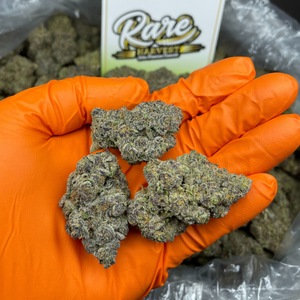
All Rare Harvest products come direct from the farm - the freshest, most potent exotic weed available anywhere.
Forget Indica vs Sativa: Effects-Based Selection
Decades of dispensary marketing have emphasized the indica/sativa classification. "Indicas are relaxing," "Sativas are energizing"-this oversimplified framework has misled countless consumers. The reality is far more complex. Some sativa-labeled strains are deeply sedating. Some indica strains are energizing. The classification is based on plant morphology (leaf shape, growth pattern), not effects.
Modern cannabis science has largely abandoned the indica/sativa framework in favor of effects-based understanding through cannabinoid and terpene profiles. This is far more useful for actual strain selection.
Instead of thinking about indica/sativa, think about desired effects:
- Do you want uplifting or relaxing?
- Do you want energizing or sedating?
- Do you want mentally stimulating or physically relaxing?
- Do you want mood elevation or body relaxation?
Once you answer these questions, matching strains becomes straightforward through cannabinoid and terpene profiles rather than confusing plant classifications.
The Terpene-First Approach
The most reliable method for strain selection is terpene-focused evaluation. Rather than checking THC percentage (which poorly predicts effects), examine terpene profiles. This single shift improves strain selection accuracy dramatically.
Start Here: Top Three Terpenes
Look at the strain's top three terpenes. These account for 50-80% of the strain's terpene profile and most directly influence effects.
For Uplifting/Daytime Strains: Look for limonene as the top terpene (or clearly present at 0.3%+), alongside pinene (0.2%+). This combination reliably produces uplifting, energetic effects. Examples: Sour Diesel (limonene + pinene + caryophyllene), Jack Herer (pinene + myrcene + caryophyllene), Lemon Haze (limonene dominant).
For Relaxing/Evening Strains: Look for myrcene-dominant profiles (0.5%+) with moderate other terpenes. This creates sedating, body-focused effects. Examples: Purple Kush (myrcene + caryophyllene), OG Kush (myrcene + limonene + caryophyllene), Granddaddy Purple (myrcene-dominant).
For Balanced/All-Day Strains: Look for balanced terpene profiles with 3-5 terpenes present in meaningful amounts. These provide nuanced, versatile effects. Examples: Wedding Cake (myrcene + limonene + caryophyllene), Do-Si-Dos (limonene + myrcene + caryophyllene), Hybrid strains generally.
This terpene-first approach is far more predictive of actual effects than any other method. After using it for 3-4 strain selections, you'll notice patterns in which terpene profiles serve your needs best.
THC Percentage: Why More Isn't Better
Many consumers assume higher THC percentage equals better cannabis. This misconception leads to expensive, often-disappointing purchases. The reality is more nuanced.
Relationship Between THC and Effects: Beyond approximately 20% THC, additional potency provides minimal effect enhancement. The difference between 20% THC and 28% THC is marginal for most users. The difference between 5% and 15% is substantial; the difference between 25% and 35% is minimal.
High THC Risks: Extremely high-THC strains (30%+ THC) can trigger anxiety in predisposed individuals. The intense effect can be overwhelming rather than pleasant for many users. More THC doesn't mean better experience; it means more intense experience, which isn't always desirable.
Terpenes Matter More Than THC %: A 15% THC strain with excellent terpene profiles often produces better, more nuanced effects than a 28% THC strain with generic terpenes. The difference in actual experience far exceeds the THC percentage difference.
The Practical Takeaway: Ignore THC percentage as your primary criterion. Select strains based on terpene profiles and cannabinoid ratios. If a strain's terpenes are right for your needs, the THC percentage is secondary. You'll likely satisfy yourself with 15-22% THC strains when selected properly, avoiding the expense and intensity risk of 30%+ THC varieties.
CBD and Minor Cannabinoids
While THC and terpenes dominate marijuana effects, CBD and other cannabinoids play supporting roles.
High-CBD Strains (1:1 or higher CBD:THC): These strains provide anxiety reduction and mild effects without strong euphoria. Ideal for medical users, daytime management, or anxiety-prone individuals. Not ideal for recreational users seeking pronounced effects. Examples: Charlotte's Web (high-CBD, low-THC), Harlequin (1:1 ratio).
Balanced Strains (3:1 or 2:1 THC:CBD): These strains combine moderate THC effects with CBD's anxiety reduction and medical benefits. Ideal for users wanting effects without anxiety risks, or medical patients. Examples: Cannatonic (balanced ratio), various medical strains.
THC-Dominant Strains (20:1 or higher THC:CBD): Traditional recreational strains with minimal CBD. Provide strong effects without CBD's calming influence. Best for experienced users or those specifically seeking strong THC effects without CBD's anxiety-reducing effects. Examples: Most popular recreational strains.
When selecting strains, note cannabinoid ratios on product pages. Choose ratios matching your needs: high-CBD for anxiety/medical use, balanced for mild anxiety management, THC-dominant for recreational effects.
Personal Preference Factors: Flavor and Aroma
Beyond neurochemistry, personal flavor and aroma preferences matter significantly for satisfaction.
Flavor Profile Matching: Do you enjoy fruity, citrus, earthy, spicy, minty, or floral cannabis? Selecting strains matching your flavor preferences dramatically increases enjoyment. If you love citrus, limonene-dominant strains with fruity descriptions will delight you. If you prefer earthy flavors, myrcene-dominant strains with earthy descriptions are better.
Strong vs Mild Aroma: Some users enjoy pungent, skunky cannabis with intense aroma. Others prefer subtle, delicate fragrances. Strain descriptions indicate aroma intensity. Select accordingly.
Reading Flavor Descriptions: Quality product pages describe flavor profiles in detail. "Creamy vanilla with spiced cake notes" (Wedding Cake) is detailed enough to predict whether you'll enjoy it. Generic "pungent" or "fruity" descriptions provide less helpful information.
Don't overlook flavor. Enjoying the taste and aroma of your marijuana significantly impacts overall satisfaction.
Intended Use: Time of Day and Activity
Different strains serve different purposes. Matching strain to intended use prevents disappointment.
Daytime/Active Use Strains
For daytime consumption or active engagement, prioritize:
- High limonene (0.3%+) and pinene (0.2%+)
- Lower myrcene (under 0.5%) to prevent sedation
- THC 12-20% (sufficient effects without overwhelming intensity)
These strains provide uplifting, energetic effects compatible with productivity and engagement. Examples: Sour Diesel, Jack Herer, Strawberry Cough, Pineapple Express.
Evening/Relaxation Strains
For evening consumption or relaxation-focused use, prioritize:
- High myrcene (0.5%+) for sedation
- Moderate caryophyllene (0.3%+) for grounding
- THC 15-25% (pronounced effects without excessive intensity)
These strains provide deep relaxation, body effects, and sleep support. Examples: Purple Kush, OG Kush, Wedding Cake, Do-Si-Dos.
Social/Flexible Strains
For social situations or flexible use (both active and relaxing), prioritize:
- Balanced terpene profiles with 3+ meaningful terpenes
- Moderate myrcene (0.3-0.5%) and limonene (0.2-0.4%)
- THC 15-22% (reliable, not extreme effects)
These strains adapt to setting and user preference, providing versatile, pleasant effects. Examples: Most popular hybrid strains like Wedding Cake, Pineapple Express, Sour Diesel.
Medical/Symptom-Specific Strains
For medical purposes (pain, nausea, anxiety, sleep), match strain to primary symptom:
- Pain: High caryophyllene (0.5%+) and myrcene (0.4%+)
- Anxiety: High limonene (0.3%+) and CBD (1%+ if available)
- Sleep: High myrcene (0.6%+) with moderate other terpenes
- Nausea: Caryophyllene and linalool-rich strains
Medical strains aren't necessarily different from recreational strains; they're selected based on symptom-specific cannabinoid/terpene profiles.
The Right Questions to Ask Before Buying
When selecting a strain, ask yourself these questions:
1. What effects do I want? (Uplifting/relaxing, energizing/sedating, euphoric/clear-headed, etc.)
2. When do I plan to use this? (Daytime/evening, work/relaxation, alone/socially, etc.)
3. What are the top three terpenes, and do they match my desired effects?
4. Is the THC percentage reasonable for my tolerance? (Beginners: 10-15%, Experienced: 15-25%, High tolerance: 20-28%)
5. Do I like the flavor profile described?
6. Are there lab test results confirming cannabinoid content?
7. Do customer reviews mention effects matching what I want?
8. Is the price reasonable for the quality? (Top Shelf flower: $12-15/gram, Standard: $8-12/gram)
Asking these questions before purchasing prevents regretful selections and builds a reliable personal database of which strains work for your individual needs.
Building Your Personal Strain Preferences
After selecting and trying 5-10 different strains, patterns emerge showing which terpene profiles, THC levels, and flavor descriptions serve your needs best. This personal database becomes invaluable for future selections.
Track: Each strain tried, terpene profile, THC %, intended effects, actual effects experienced, flavor quality, and overall satisfaction rating (1-10). After 5-10 entries, your preferences become clear.
Identify Patterns: Do you consistently enjoy high-limonene strains? Do myrcene-dominant varieties consistently disappoint? Do you prefer 15-18% THC over 20%+? These patterns should guide future selections.
Revisit Winners: Once you identify strains that consistently satisfy you, they become reliable re-purchases. You've found your personal optimal strains.
Navigating Dispensary Budtenders
Knowledgeable budtenders provide excellent guidance. When speaking with budtenders:
Communicate Clearly: Describe desired effects, intended use, and flavor preferences. "I want something uplifting for daytime that tastes fruity" is far more useful than "what's good?"
Ask About Terpenes: Ask the budtender about terpene profiles. A knowledgeable budtender can explain how limonene contributes uplifting effects. Less knowledgeable budtenders may just recite THC percentage.
Request Lab Results: Ask for or look up lab test results. Quality dispensaries have them available on their websites or in-store.
Trust Your Preferences: If a budtender's recommendation doesn't match your stated preferences, politely decline. You know your needs better than they do.
Leave Reviews: After trying strains, leave detailed reviews on the dispensary website or Leafly. This helps future consumers and incentivizes dispensaries to improve product knowledge.
Getting Started: Your First Intentional Selection
For your first conscious strain selection, visit Rare Harvest's flower collection and use this framework:
1. Identify your desired effects (uplifting/relaxing, energizing/sedating)
2. Read terpene profiles for strains and identify those matching your desired effects
3. Check flavor descriptions matching your taste preferences
4. Verify THC percentage is in your comfort range
5. Read customer reviews to confirm reported effects match your expectations
6. Make your selection based on this framework rather than random choice
This intentional selection dramatically improves the probability of satisfaction compared to random dispensary selections.
Conclusion
Strain selection ceases being mysterious once you understand that terpenes predict effects far better than THC percentage or indica/sativa classification. By focusing on terpene profiles, matching strains to intended use, considering flavor preferences, and asking the right questions before purchasing, you'll consistently select cannabis that delights rather than disappoints.
Your next selection, approached through this framework using Rare Harvest's detailed product information, will likely improve your satisfaction dramatically. Learn your personal terpene preferences, build your personal strain database, and enjoy cannabis selection as a methodical, rewarding process rather than hit-or-miss guessing.