



Last Updated: March 2026
THCa and CBD are two of the most discussed compounds in the cannabis world, yet many consumers remain uncertain about their differences, their effects, and how they compare as marijuana options. This comprehensive 2026 guide breaks down the THCa vs. CBD comparison — explaining what each compound is, how they work, what experiences they produce, and how to choose between them based on your specific needs. Whether you're an experienced weed smoker exploring the science of marijuana or a newcomer trying to understand your options, this guide provides the clear, honest comparison you need.
What Is THCa?
THCa (tetrahydrocannabinolic acid) is the acidic precursor to THC — the compound that actually produces the psychoactive "high" associated with marijuana. In living cannabis plants, THC exists primarily as THCa. When weed is smoked, vaporized, or heated (a process called decarboxylation), THCa converts to THC through the removal of a carboxyl group. This is why raw cannabis leaves eaten directly don't produce a high — the THCa they contain hasn't been converted to active THC yet. Under the 2018 Farm Bill, cannabis with less than 0.3% delta-9 THC by dry weight qualifies as legal hemp regardless of THCa content. This is why "THCa flower" has become the dominant legal framework for selling premium marijuana nationwide — the weed contains high THCa that converts to psychoactive THC when consumed, but technically contains minimal delta-9 THC in its raw form.
What Is CBD?
CBD (cannabidiol) is the second most abundant cannabinoid in cannabis, but unlike THCa/THC, it doesn't produce significant psychoactive effects. CBD interacts with the endocannabinoid system through different mechanisms than THC — it doesn't strongly bind to CB1 receptors in the brain, which is why it doesn't produce a traditional marijuana high. Instead, CBD modulates various receptor systems (including serotonin and TRPV1 receptors) to produce anxiety relief, anti-inflammatory effects, and other therapeutic benefits without intoxication. CBD-dominant weed strains and pure CBD products are marketed primarily for their therapeutic properties without the recreational high associated with THC-rich marijuana.
THCa vs. CBD: Effects Comparison
The most important practical difference is simple: THCa flower, when consumed, produces the full marijuana high that weed smokers expect — euphoria, altered perception, relaxation, creativity, or sedation depending on the strain and dose. CBD products do not produce this high. For recreational marijuana use, THCa flower is the appropriate choice. For therapeutic applications that require daytime functionality without impairment, CBD products may be preferable. Many sophisticated marijuana users combine both: using CBD for daytime anxiety management and inflammation without impairment, and THCa exotic weed strains in the evening for relaxation, pain relief, and sleep support. The combination of THCa and CBD in full-spectrum marijuana may also produce synergistic "entourage effect" benefits that neither compound provides alone.
Legal Status in 2026
Both THCa flower and CBD products are legal under the 2018 Farm Bill when they comply with the less-than-0.3% delta-9 THC requirement. Note that H.R. 5371 takes effect November 12, 2026, and would redefine "total THC" to include THCa — potentially removing THCa flower from the legal hemp category. Several pending bills (including the Hemp Planting Predictability Act H.R. 7010 and the HEMP Act H.R. 7212) may delay or alter this outcome. CBD's legal status under the Farm Bill is more straightforward and less subject to the regulatory ambiguity affecting THCa marijuana.
Which Is Better for Specific Conditions?
For chronic pain requiring significant relief, THCa marijuana typically outperforms CBD products — the psychoactive THC component provides more powerful pain modulation than CBD alone. For daytime anxiety management where functionality matters, CBD-dominant marijuana or products allow symptom management without impairment. For sleep disorders, THCa exotic weed strains (particularly indica-dominant marijuana) generally produce more pronounced sleep support than CBD alone. For inflammatory conditions, the combination of THCa and CBD in full-spectrum marijuana outperforms either alone — this is the most validated use case for whole-plant marijuana over isolated compounds. For seizure disorders, CBD (Epidiolex) has FDA approval and the strongest clinical evidence base — THC-dominant marijuana is not a recommended approach for epilepsy management.
Frequently Asked Questions
Will THCa flower get me high?
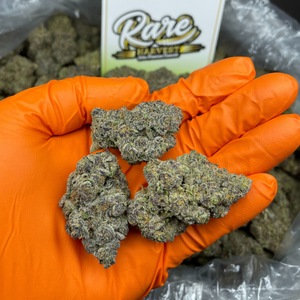
Yes. When smoked or vaporized, THCa converts to active THC and produces the full marijuana high. THCa flower is essentially premium weed sold legally under the 2018 Farm Bill's hemp provisions. It is functionally indistinguishable from recreational marijuana in its effects.
Will CBD get me high?
No. CBD does not produce significant psychoactive effects and will not create a marijuana high at typical supplemental doses. CBD's effects are therapeutic rather than recreational.
Can I take CBD and THCa marijuana together?
Yes, and many experienced marijuana users do exactly this for comprehensive therapeutic coverage. CBD can also moderate some of the anxiety-producing effects of high-THC exotic weed, making the combination gentler for THC-sensitive users.
Where can I buy quality THCa marijuana online?
Browse Rare Harvest's exotic weed collection for premium THCa flower — federally legal marijuana shipping to most US states. Every product comes with lab testing confirming THCa content and delta-9 THC compliance under the 2018 Farm Bill.
The Entourage Effect: THCa and CBD Together
The entourage effect — the hypothesis that cannabis compounds work better together than in isolation — is particularly relevant to the THCa vs. CBD debate. Research by Dr. Raphael Mechoulam and others suggests that CBD modifies THC's effects in meaningful ways: CBD appears to reduce THC-induced anxiety, moderate the intensity of the marijuana high, and potentially enhance the anti-inflammatory and analgesic properties of the combined marijuana experience. This is why full-spectrum cannabis products (which contain both THCa/THC and CBD, plus dozens of other minor cannabinoids and terpenes) often outperform isolated THC or CBD products for therapeutic applications. The practical implication for weed smokers is that exotic weed strains naturally containing some CBD alongside their THCa content may provide a more balanced, comfortable marijuana experience than pure THCa isolates. When selecting marijuana for therapeutic purposes, consider the full cannabinoid profile rather than optimizing for THCa content alone.
The Regulatory Future of THCa and CBD in 2026
The legal landscape for both THCa and CBD is in flux as 2026 progresses. The 2018 Farm Bill created the current framework allowing THCa marijuana as legal hemp, but H.R. 5371 (effective November 12, 2026) would redefine "total THC" to include THCa, potentially removing high-THCa weed from the legal hemp category. CBD, with its established FDA-approved pharmaceutical application (Epidiolex for epilepsy), has a more stable regulatory future — its therapeutic legitimacy is less contested than THCa marijuana's. The HEMP Act (H.R. 7212), currently pending, would create a new FDA regulatory framework for hemp-derived cannabinoid products that could legitimize both THCa and CBD products through rulemaking rather than leaving them in the current ambiguous gray area. The Hemp Planting Predictability Act (H.R. 7010) would delay H.R. 5371's implementation by two years. Weed smokers and CBD users should follow these legislative developments closely — the regulatory environment for all cannabis compounds will look significantly different by late 2026. Browse Rare Harvest's exotic weed collection for premium THCa marijuana while current federal legality is clear.
Ready to experience premium THCa marijuana? Shop Rare Harvest's exotic weed collection for the finest exotic weed available online — lab-tested, legally compliant, and shipped directly to your door.