



What Is THCa: The Complete Guide to Cannabis Acid Chemistry
THCa (tetrahydrocannabinolic acid) has become an increasingly common term in cannabis discussions, particularly in legal hemp markets where it's marketed as a workaround for THC restrictions. Yet most consumers remain confused about what THCa actually is, why it matters, and whether THCa-dominant products are equivalent to traditional marijuana. Understanding THCa chemistry, its effects, and its role in cannabis legality provides clarity for informed purchasing decisions. This comprehensive guide explains the science behind THCa, its legal status, and why Rare Harvest emphasizes actual cannabis containing both THCa and activated THC rather than THCa-only loophole products.
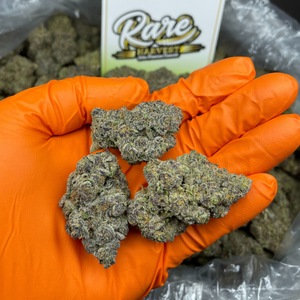
We ship every order direct from the farm, ensuring you get the freshest exotic marijuana possible.
The Chemistry of THCa and THC
THCa (tetrahydrocannabinolic acid) and THC (tetrahydrocannabinol) are distinct chemical compounds despite their similar names. Both are cannabinoids, but they have fundamentally different molecular structures affecting how they interact with the human body.
THCa Structure: THCa contains a carboxylic acid group (COOH) attached to its molecular backbone. This acid group is the fundamental feature distinguishing it from THC.
THC Structure: THC lacks the carboxylic acid group. The acid group has been removed, leaving behind a different molecular shape.
This single structural difference profoundly affects how these molecules interact with cannabinoid receptors in the human brain and body. The shape of a molecule determines whether it fits into receptor binding sites. THCa's shape doesn't fit CB1 receptors effectively; THC's shape fits perfectly.
Practical Implication: THCa doesn't produce the "high" associated with cannabis because it doesn't activate the receptors responsible for euphoria, altered perception, and intoxication. Only THC produces these effects.
The Decarboxylation Process
Decarboxylation is the chemical process removing the carboxylic acid group (COOH) from THCa, converting it to THC. This process occurs when marijuana is exposed to heat or left to age at room temperature.
Heat-Based Decarboxylation
When cannabis flower is smoked, the combustion temperature (900°F+) instantly decarboxylates essentially all THCa present, converting it to active THC. This is why smoking produces immediate, strong effects.
Vaping at moderate-to-high temperatures (350°F+) decarboxylates significant amounts of THCa. At lower temperatures (300°F), conversion is incomplete. This explains why variable-temperature vapes produce different intensity experiences at different temperatures.
Cooking edibles requires intentional decarboxylation: heating flower to 240-250°F for 20-40 minutes before infusion into butter or oil. Without this step, edibles made from raw flower produce minimal effects because unconverted THCa doesn't activate cannabinoid receptors.
Time-Based Decarboxylation
Even at room temperature, THCa gradually converts to THC through natural decarboxylation. Dried cannabis sitting at room temperature loses approximately 5-10% of THCa content monthly as it spontaneously converts. Over a year, room-temperature storage results in 50%+ of THCa converting to THC.
This is why old marijuana-even cannabis that's never been heated-has higher THC and lower THCa percentages than fresh flower. The conversion occurred passively during storage.
THCa's Effects: The Missing Intoxication
Raw THCa, consumed without decarboxylation, does not produce the "high" associated with cannabis. No matter the amount, unconverted THCa will not intoxicate.
Raw Cannabis Juice: Some users consume marijuana juice from fresh, unheated flower. They consume substantial amounts (sometimes 30+ grams of fresh flower equivalent) expecting effects similar to smoking. Instead, they experience minimal intoxication despite high raw THCa content. This demonstrates that THCa itself doesn't produce the characteristic cannabis high.
Emerging THCa Research: Recent studies suggest THCa may have independent biological effects through non-CB1 receptor pathways, potentially providing anti-inflammatory, neuroprotective, and anti-nausea properties. However, these effects are much weaker than THC's effects and remain poorly understood. Most consumers seeking cannabis effects need THC, not THCa.
Important Distinction: THCa is not a "weak" or "pre-activated" form of THC. It's a distinct molecule with its own (poorly understood) properties. It simply doesn't activate CB1 receptors, meaning it doesn't produce intoxication.
The Legal Loophole: THCa in Hemp Markets
The 2018 Farm Bill legalized hemp, defined as marijuana containing less than 0.3% THC by dry weight. However, the definition didn't explicitly regulate THCa. This created a legal ambiguity: hemp flower containing 20% THCa (which converts to THC when consumed) remained technically legal despite providing essentially equivalent effects to illegal cannabis once decarboxylated.
This loophole led to a market for "THCa-dominant hemp flower"-cannabis genetically bred to contain minimal THC but substantial THCa. Consumers purchase this flower, heat it (smoking, vaping, or cooking), which decarboxylates the THCa to THC, producing effects identical to traditional marijuana.
The Marketing Claim: Some vendors market THCa-dominant flower as "real marijuana" or "actual cannabis," claiming it's superior to products marketed as legal hemp loopholes. This framing confuses two separate issues:
1. Botanically, THCa is the actual cannabinoid cannabis plants produce. In this narrow sense, THCa is the "real" compound.
2. Functionally, THCa-dominant products require decarboxylation to produce effects. Raw consumption provides minimal effects, making them unsuitable as-is.
Honest Assessment: THCa-dominant flower is marijuana flower with a specific cannabinoid ratio and legal status in certain jurisdictions. It's not superior to or inferior to THC-containing cannabis-it's just a different legal category in specific markets. Marketing it as "real marijuana" deliberately obscures these distinctions to create perceived superiority.
THCa Products and Consumption
THCa-Dominant Flower
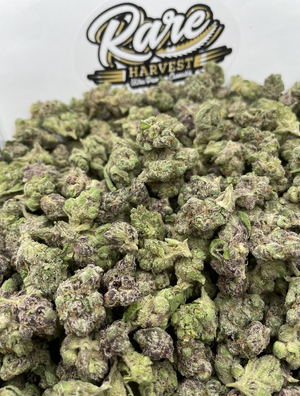
Raw consumption of THCa-dominant flower produces minimal effects due to lack of CB1 activation. These products require heating (smoking, vaping, cooking) for activation. Once heated, they're indistinguishable from traditional cannabis-decarboxylated THCa becomes THC, producing expected effects.
THCa Concentrate and Crystalline
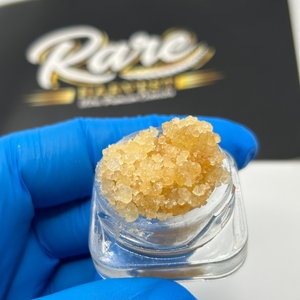
Purified THCa crystals are sometimes sold in legal hemp markets. Raw consumption provides minimal intoxication. When heated (in dab rigs, vape devices, or while smoking/cooking), the crystals decarboxylate to THC, producing expected marijuana effects.
THCa Tinctures and Distillates
Some products contain THCa in liquid form. Again, raw consumption provides minimal effects; heating is required for activation.
Why Rare Harvest Emphasizes Genuine Marijuana
Rare Harvest operates in jurisdictions where cannabis is legal. Rather than marketing THCa-dominant loophole products, we focus on genuine cannabis containing meaningful amounts of both THCa and activated THC.
Why This Matters:
Transparency: Our products are clearly identified as marijuana, not marketed through legal loopholes as "hemp" that happens to become cannabis when heated. We believe transparency serves consumers better than exploiting regulatory language gaps.
Consistency: Our flower contains both THCa (the raw form plants produce) and THC (activated through handling and slight aging). This provides consistent effects whether consumers smoke immediately, age flower before use, or decarboxylate for edibles.
Quality and Testing: Operating in regulated markets allows comprehensive testing. Products are tested for cannabinoid content (both THCa and THC), terpenes, pesticides, mold, and contaminants. Legal hemp markets often lack these testing requirements.
Consumer Protection: Regulated cannabis markets provide consumer protection, third-party lab testing verification, and seed-to-sale tracking. Hemp markets operating through legal loopholes often lack these protections.
Genuine cannabis from Rare Harvest offers clarity, transparency, and genuine marijuana effects without navigating legal gray areas or relying on products requiring decarboxylation before they function.
Understanding Lab Reports: THCa vs THC Listed Separately
When examining lab reports for cannabis, you'll typically see:
% THCa: The percentage of tetrahydrocannabinolic acid (acid form) in the sample.
% THC: The percentage of activated tetrahydrocannabinol (non-acid form) in the sample.
% Total THC (Calculated): The theoretical maximum THC if all THCa were completely decarboxylated. This calculation assumes complete conversion of all THCa to THC.
A sample testing 18% THCa and 1% THC has not been significantly heated. A sample testing 10% THCa and 10% THC has been partially converted through aging or light heating. A sample testing minimal THCa and 20% THC has been extensively heated or aged.
For practical consumption, the "% Total THC (Calculated)" is most meaningful-it represents the maximum THC potential after complete consumption (smoking, vaping, or decarboxylation for edibles).
Common Misconceptions Clarified
Misconception: THCa is weaker than THC.
Reality: THCa is not weaker; it's non-intoxicating. Once decarboxylated to THC, it's identical to other THC molecules. There's no "strength" difference between THCa that's been decarboxylated and THC that was already decarboxylated.
Misconception: THCa products are legal everywhere.
Reality: Legal status varies by jurisdiction. Some states explicitly prohibit THCa despite the federal farm bill loophole. Others are closing the loophole through regulatory changes. Check your local cannabis laws before purchasing THCa products.
Misconception: You can consume THCa raw and get effects.
Reality: Unconverted THCa produces minimal effects even in large amounts. Some users report subtle benefits from raw cannabis consumption, but intoxicating effects require THC activation through heating or decarboxylation.
Misconception: THCa-dominant flower is "more real" marijuana.
Reality: All cannabis flower contains THCa as its primary cannabinoid form. Upon heating or aging, THCa converts to THC. Both THCa-dominant and THC-containing flower are "real" cannabis. The difference is legal categorization in specific markets, not botanical reality or quality.
Choosing Between THCa-Dominant and Traditional Cannabis
If you have legal access to both options in your jurisdiction:
Choose Traditional Cannabis (from Rare Harvest): If you want transparency, tested quality, and immediate effects without requiring heating for activation. Traditional marijuana contains both THCa and THC, providing flexibility in consumption method.
Choose THCa-Dominant Products: Only if they're your legal option (other options prohibited in your jurisdiction). Understand that heating is required for effects, and test for consistency (THCa content should be clearly listed).
For most consumers in legal jurisdictions, genuine cannabis remains preferable to THCa-loophole products.
Conclusion
THCa is the raw, acid-containing form of cannabis's primary psychoactive cannabinoid. It becomes THC through heating or aging-processes required for intoxicating effects. The marketing of THCa-dominant products as "real marijuana" exploits semantic ambiguity rather than representing botanical or functional superiority.
Rare Harvest provides genuine marijuana containing meaningful amounts of both THCa and THC, tested for quality and potency, and marketed with complete transparency. This approach prioritizes consumer clarity and protection over legal loopholes, providing reliable cannabis effects and understanding of exactly what you're consuming.
Choose Rare Harvest's genuine cannabis and enjoy products with transparent testing, clear effects, and no need to decode marketing claims exploiting regulatory language gaps.