





Last Updated: April 2026
If you've spent any time in a dispensary or browsing an online weed store, you've encountered the three primary marijuana categories: indica, sativa, and hybrid. These terms are cannabis culture's most widely used shorthand for describing weed effects — indica for relaxation, sativa for energy, hybrid for balance. But how accurate is this framework in 2026? Modern cannabis science has complicated the picture, and experienced weed enthusiasts increasingly argue that these labels are too simplistic to be genuinely useful. This guide provides a comprehensive 2026 update on indica vs. sativa vs. hybrid marijuana — what the traditional distinction means, where it falls short, and how to use this information alongside terpene data to make better weed choices.
The Traditional Indica vs. Sativa Distinction
The terms indica and sativa originally described physical characteristics of the marijuana plant itself, not effects. Cannabis indica plants are short, bushy, with wide dark-green leaves — originally native to the Hindu Kush mountain region. Cannabis sativa plants are tall, lanky, with narrow light-green leaves — originally from equatorial regions like Colombia, Thailand, and Mexico. Ruderalis, the third botanical category, is a short, auto-flowering marijuana variety from Russia with minimal THC.
The effect associations — indica for body relaxation, sativa for mental stimulation — came from cultivators and consumers observing consistent patterns in how different marijuana plant types affected users. And these observations aren't wrong, exactly: many indica weed strains do tend to produce more sedating, body-focused effects, while many sativa marijuana strains lean cerebral and energizing. The problem is that these tendencies are driven by terpenes and cannabinoid ratios, not by the plant's physical morphology. Modern hybrid marijuana breeding has blended indica and sativa genetics so thoroughly that the physical categories no longer reliably predict effect profiles.
Indica Weed: What to Actually Expect
Despite the limitations of the label, indica marijuana strains remain a useful shorthand when they're accurate. True indica-dominant weed tends to: be high in myrcene (earthy, sedating terpene), produce stronger body effects than cerebral stimulation, have higher CBD:THC ratios than sativa weed on average, and be more commonly used for nighttime marijuana use and medical applications like pain relief and insomnia. Classic indica marijuana strains like Granddaddy Purple, Northern Lights, Afghani, and Hindu Kush reliably deliver this profile.
Sativa Weed: What to Actually Expect
Sativa marijuana strains tend to feature higher concentrations of terpinolene, limonene, and pinene — terpenes associated with cerebral, uplifting, and energizing effects. True sativa-dominant weed like Sour Diesel, Jack Herer, and Durban Poison typically produces: uplifted mood and mental stimulation, increased energy and motivation, creative and social enhancement, and is more commonly used for daytime marijuana activities. Sativa weed can occasionally trigger anxiety in high-THC doses for sensitive users.
Hybrid Weed: The Reality of Modern Marijuana
The reality is that nearly all marijuana sold today is hybrid weed to some degree — decades of selective breeding have blended indica and sativa genetics throughout the modern cannabis gene pool. Even strains labeled "sativa" or "indica" at dispensaries and online retailers are typically hybrids that lean one direction or the other. True landrace (unhybridized) marijuana strains are rare. This means the hybrid category is less a distinct marijuana type and more an acknowledgment of the complexity of modern weed genetics.
Hybrid marijuana can lean indica-dominant (more relaxing, body-focused weed), sativa-dominant (more energizing, cerebral), or balanced (combining effects from both marijuana categories). The balanced hybrids are often the most versatile weed strains — offering enough mental engagement for daytime use while providing body relaxation that doesn't push you to sleep.
Why Terpenes Matter More Than Indica/Sativa Labels
Experienced marijuana researchers and consumers increasingly argue that terpene profiles are more reliably predictive of weed effects than indica/sativa labels. A high-myrcene "sativa" marijuana will feel more indica-like than a low-myrcene "indica" weed. This is why two marijuana strains sold under the same "indica" label can produce meaningfully different effects. When choosing weed for specific therapeutic or recreational purposes, check the terpene data alongside the indica/sativa designation for the most accurate picture.
2018 Farm Bill Compliance
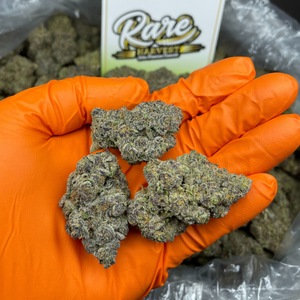
All indica, sativa, and hybrid marijuana strains at Rare Harvest are available as federally legal THCa flower under the 2018 Farm Bill, containing less than 0.3% delta-9 THC by dry weight. Premium weed shipped nationally via USPS Priority Mail.
Frequently Asked Questions
Is indica weed better for relaxation than sativa?
Generally yes — indica marijuana strains, particularly those with high myrcene content, consistently produce more body-relaxing effects than sativa weed. However, individual terpene profiles matter more than the label. A low-myrcene indica can feel less relaxing than a myrcene-heavy hybrid. Check terpene data when choosing marijuana for relaxation.
What's the best hybrid weed for beginners?
Blue Dream is the most widely recommended hybrid marijuana for beginners — its balanced effects, moderate THC content, and pleasant flavor profile make it a forgiving and enjoyable first weed experience. Other beginner-friendly hybrid marijuana strains include Gorilla Glue #4 and Pineapple Express.
Can sativa weed cause anxiety?
Yes — high-THC sativa marijuana strains, particularly those with high terpinolene content, can trigger or amplify anxiety in sensitive users. This is especially true at higher doses. For anxiety-prone weed consumers, indica-dominant or high-CBD hybrid marijuana is a safer choice. See our dedicated anxiety weed guide.
Do indica and sativa weed differ in THC content?
No consistent difference in THC content exists between indica and sativa marijuana strains. Both can range from low to extremely high THC percentages. Potency is determined by genetics, growing conditions, and curing processes — not by the indica/sativa designation.
Beyond Indica/Sativa: The Future of Marijuana Classification
Leading cannabis researchers and some industry organizations are pushing for a terpene-based classification system to replace or supplement the indica/sativa/hybrid framework for marijuana. Under this emerging model, weed strains would be categorized by their dominant terpene profiles rather than plant morphology — "myrcene-dominant" instead of "indica," "terpinolene-dominant" instead of "sativa," and so on. This would be more scientifically accurate and more practically useful for marijuana consumers making effect-based purchasing decisions.
However, the indica/sativa/hybrid system is so deeply embedded in marijuana culture that it's unlikely to disappear from mainstream use anytime soon. The more practical approach for weed consumers in 2026 is to use the traditional categories as a rough first filter, then dig into terpene data for precision. This hybrid approach — pun intended — combines the cultural familiarity of indica/sativa/hybrid marijuana language with the scientific rigor of terpene-based prediction. It's how the most sophisticated weed enthusiasts already choose their marijuana, and it's accessible to anyone willing to spend five minutes learning the major terpene profiles.
Regional Marijuana Genetics and Their Indica/Sativa History
Understanding where different marijuana genetic lineages come from adds depth to the indica/sativa story. Classic indica weed strains trace to the Hindu Kush mountain range — Afghanistan, Pakistan, northern India — where cannabis evolved in harsh mountain conditions, developing dense, resinous buds as protection. Classic sativa marijuana genetics come from equatorial regions: Colombian Gold, Thai Stick, Acapulco Gold — long-season landrace weed adapted to growing in tropical environments with longer light cycles. These regional adaptations explain why the terpene and effect differences between indica and sativa marijuana are real, even if modern hybridization has blurred the boundaries considerably. When you smoke a modern Granddaddy Purple, you're experiencing a weed strain with deep roots in ancient Hindu Kush genetics — and that heritage shows up in every myrcene-heavy, body-relaxing puff.
Find your perfect indica, sativa, or hybrid weed in Rare Harvest's exotic weed collection — premium marijuana with full terpene profiles and lab testing.